Balcony Herb Garden for Beginners, Step by Step
This post may contain affiliate links: if you buy through them, we may earn a small commission at no extra cost to you. Details.
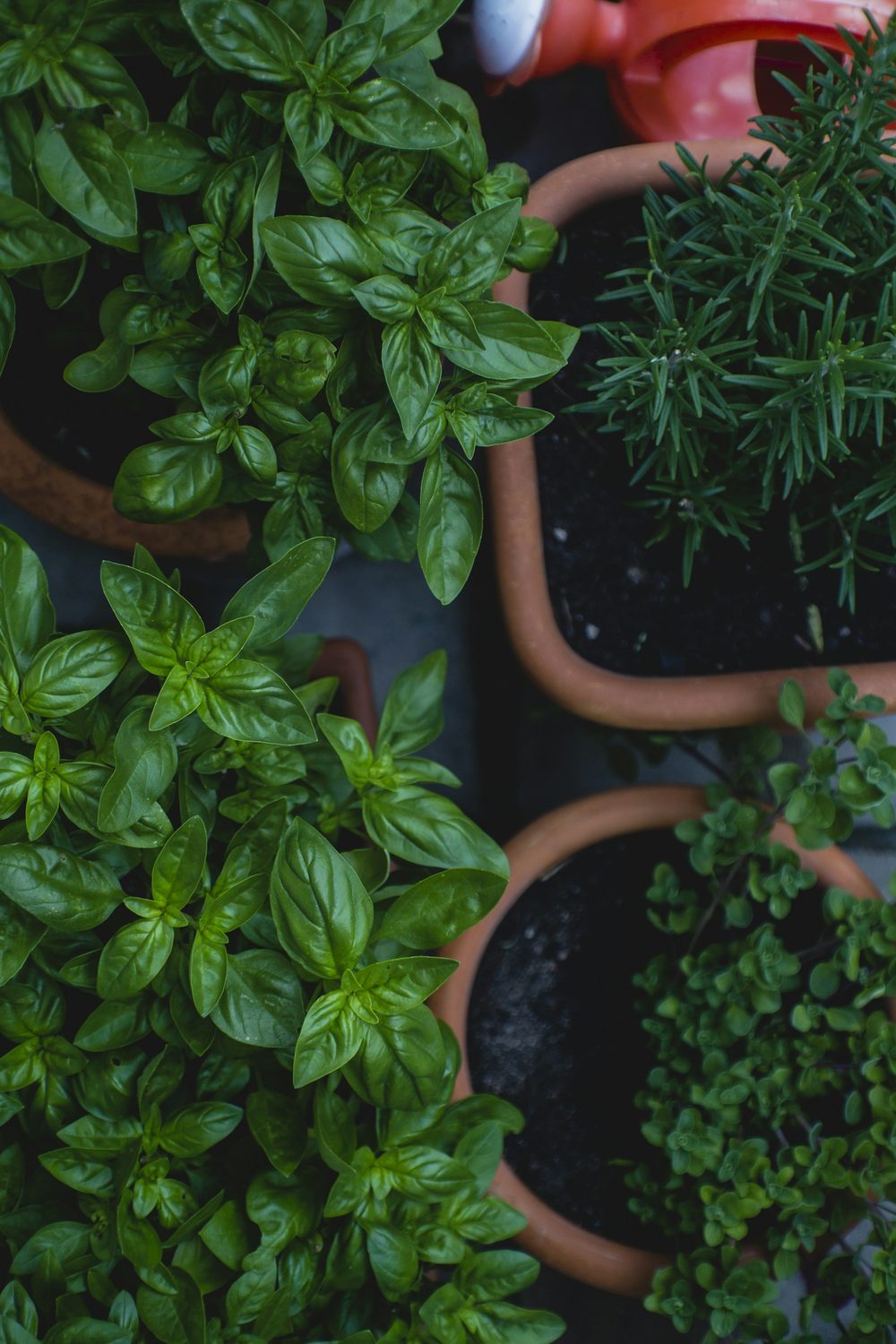
Herbs are the easiest edible plants to grow in pots, and a balcony is often a better place for them than a garden bed: fewer slugs, better drainage and the kitchen a few steps away. You need light, a pot with a hole in it, decent potting mix and the habit of checking the soil with a finger.
This guide goes in the order you will actually do things.
Step 1. Count your hours of sun
Stand on the balcony on a clear day and note when direct sun reaches the spot where the pots will go.
- 6 hours or more: basil, rosemary, thyme, oregano, sage. Mediterranean herbs want all the sun they can get.
- 3 to 5 hours: parsley, chives, cilantro, dill.
- Bright shade, under 3 hours: mint, lemon balm, chervil. Growth is slower but steady.
Choosing herbs for the light you have is the single decision that matters most. Basil in shade and mint in a baking south-facing corner both fail, no matter what else you do.
Step 2. Pick five herbs you cook with
Start with what you already buy. A good first set for a sunny balcony is basil, parsley, chives, thyme and mint. Buy young plants for the first season: they give a harvest in two weeks, while seeds take two months. Seeds make sense for cilantro and dill, which dislike being transplanted.
Step 3. Choose containers with drainage
Any pot works if water can leave it. Roots sitting in water rot within days, and that kills more herbs than forgetting to water.
- A railing planter saves floor space and puts herbs in the best light.
- A window box about 60 cm long holds three or four herbs.
- Fabric grow bags are cheap, light and drain perfectly; they dry out faster in summer.
- A self-watering planter has a reservoir in the base and forgives a missed weekend.
Step 4. Use potting mix, not garden soil
Garden soil packs down in a pot and drains badly. Buy a bag of potting mix for containers. For rosemary, thyme, sage and oregano, mix in a few handfuls of perlite or coarse sand so the soil dries faster between waterings.
Step 5. Plant by water needs
Group herbs that want the same amount of water, and you will not have to think about it afterwards.
- Dry group: rosemary, thyme, sage, oregano. Let the top 3 cm dry out.
- Moist group: basil, parsley, chives, cilantro. Keep evenly damp.
- Alone: mint. It spreads by runners and smothers neighbors, so it always gets its own pot.
Set plants at the same depth they were in the nursery pot, press the mix down lightly and water until it runs out of the bottom.
Step 6. Water by touch, not by calendar
Push a finger into the soil up to the second knuckle. Dry there means water; damp means wait. In summer small pots on a sunny balcony may need water every day, in spring twice a week. Water in the morning and aim at the soil, not the leaves.
Step 7. Harvest often
Cutting is what keeps herbs bushy. Take the top third of a stem, just above a pair of leaves, and two new shoots grow from that point. Pinch off basil flower buds as soon as they appear, or the leaves turn bitter. Never take more than a third of a plant at once.
Step 8. Feed lightly
Potting mix has food for about six weeks. After that, a half-strength liquid fertilizer every two to three weeks is enough for the leafy herbs. Mediterranean herbs need almost none: too much makes them soft and less fragrant.
Common problems
- Yellow lower leaves, wet soil: overwatering. Let the pot dry and check the drainage hole.
- Tall, pale, floppy stems: not enough light. Move the pot or switch to a shade herb.
- Cilantro or basil flowering early: heat stress. Harvest harder and sow a new batch.
- Tiny green insects on new growth: aphids. Rinse them off with water for a few days in a row.
- White powder on leaves: mildew from crowding. Thin the plant and water the soil only.
What it gives you
Five pots cover most everyday cooking from late spring to autumn, and rosemary, thyme and sage stay green through a mild winter. When the first season goes well, add a second box: that is how most balcony gardens begin.