11 Patio Shade Ideas for Every Budget
This post may contain affiliate links: if you buy through them, we may earn a small commission at no extra cost to you. Details.
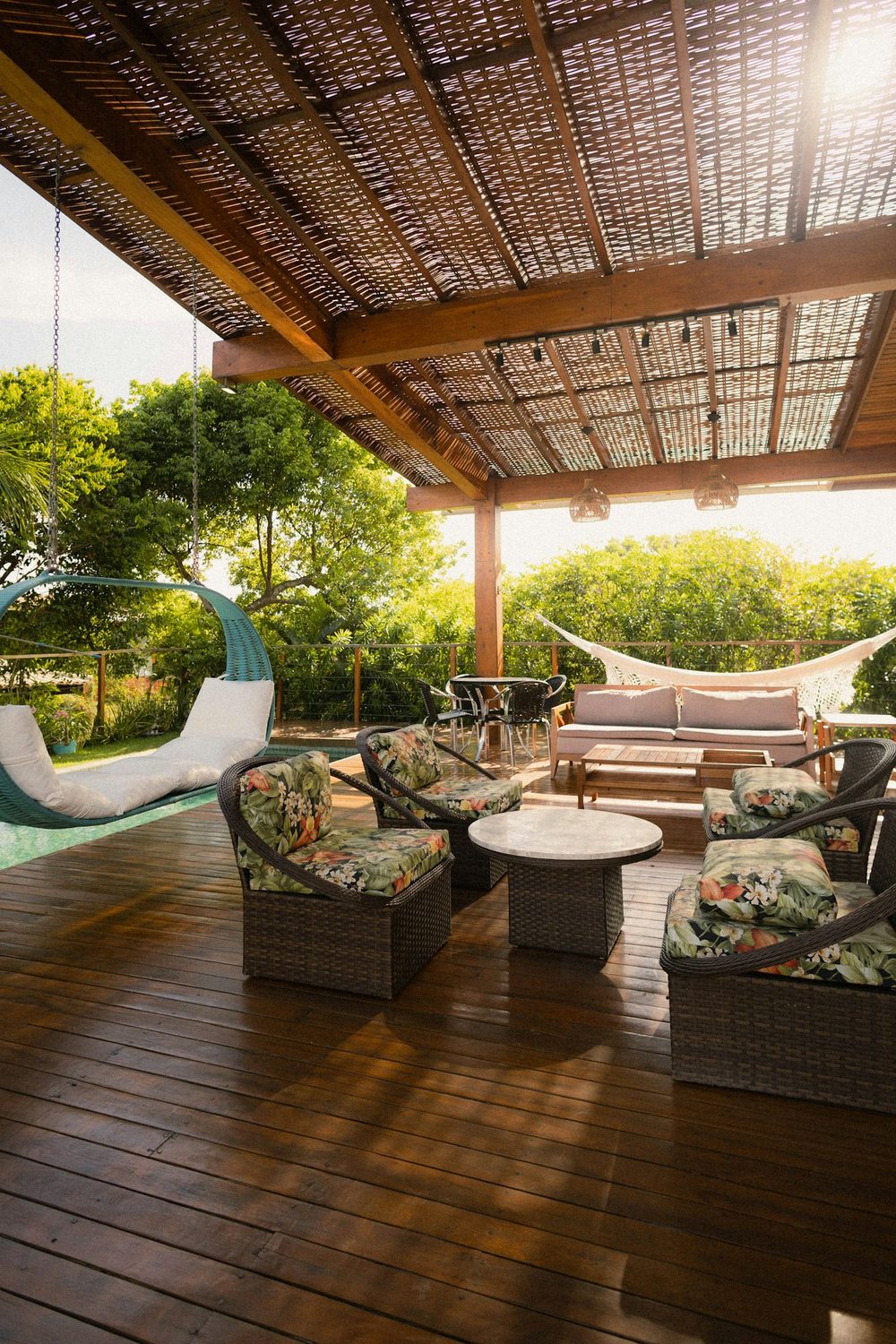
Shade is the difference between a patio you look at and a patio you sit on. The right choice depends on three things: where the sun is when you want to be outside, whether you can fix anything to a wall or the ground, and how much wind you get.
Before you choose: find the sun
Go out at the hour you normally use the patio and see where the sun is.
- High midday sun is blocked by anything overhead: an umbrella, a sail, a pergola roof.
- Low afternoon sun from the west slips under overhead shade. You need something vertical as well: a side curtain, a screen or a tilting umbrella.
- All-day exposure justifies a permanent structure.
1. Market umbrella
The simplest answer. A 9 foot umbrella shades a table for four. Choose a crank lift and a tilt function so you can follow the sun. Close it whenever you leave: wind is what destroys umbrellas.
2. Cantilever umbrella
The pole stands to one side and the canopy hangs over the seating, so nothing sits in the middle of the table or the sofa. Most rotate 360 degrees and tilt. They cost more and need a very heavy base, often sold separately and filled with sand or water.
3. Shade sail
A sail gives the most shade for the least money and looks modern. It needs three or four strong fixing points and must be installed tight, with one corner lower so rain runs off. Choose breathable HDPE fabric for hot climates: it lets heat escape.
4. Pop-up canopy
For a rental or an occasional need, a folding canopy goes up in minutes and stores in a bag. It is not a permanent solution and must be weighted or staked every time.
5. Soft-top gazebo
A steel frame with a fabric roof, often with mosquito netting and curtains. It creates a true outdoor room for a fraction of the price of a hardtop. The fabric roof should come off before winter storms and usually needs replacing after a few seasons.
6. Hardtop gazebo
A galvanized steel or polycarbonate roof on an aluminum frame stays up all year and handles rain. It is a real structure: it needs anchoring to concrete or footings, two people and a weekend to assemble. Check whether your town or homeowners association requires a permit.
7. Pergola with a retractable canopy
A pergola gives structure for lights, curtains and climbers. Open slats alone give only partial shade, so look for a model with a sliding fabric canopy that you open and close as needed.
8. Louvered pergola
The premium option. Aluminum slats rotate from fully open to fully closed, so you get sun, shade or rain cover on demand. It is the most expensive item here and worth it only if you use the patio most days.
9. Retractable awning
Fixed to the house wall, an awning extends when you need it and disappears when you do not. It leaves the patio floor completely free. It needs a solid wall and careful installation; manual crank models cost far less than motorized ones.
10. Outdoor curtains and side shades
The fix for low sun. Hang outdoor curtains on a pergola or gazebo, or add a roll-up shade on the west side. They also give privacy and block wind.
11. Living shade
A small tree in a large container or a vine over a pergola is the slowest and the most pleasant shade. Leaves cool the air as well as blocking sun. Wisteria, grape and star jasmine cover a pergola in two to three seasons.
Quick comparison
- Cheapest: shade sail, market umbrella.
- No drilling, no anchoring: umbrella with a weighted base, pop-up canopy.
- Best for renters: cantilever umbrella. It moves with you.
- Best for rain as well as sun: hardtop gazebo, louvered pergola.
- Best for small patios: wall awning or cantilever umbrella, because the floor stays clear.
- Best for wind: permanent anchored structures. Avoid large umbrellas and loose sails.
Safety notes
- Anything with a roof must be anchored. Weights alone are not enough for a gazebo.
- Never use a fire pit or grill under fabric shade.
- Check snow load ratings if you plan to leave a hardtop up in winter.